Home › Applications

Applications

Academic research and industrial deployment with fiber-feedback OPOs

Stuttgart Instruments builds fiber-feedback optical parametric oscillators (FF-OPO). Choose academic (universities, institutes, published methods) or industrial (monitoring, QC, OEM)—both use the same hardware with different integration.

  • 700 nm – 20 µm
  • 100 fs – 1.5 ps
  • 10 – 80 MHz
  • < −160 dBc/Hz RIN

When a fixed-wavelength laser is not enough

  • Tune across MIR bands for phonon resonances, gas lines, or Raman resonances without swapping optics.
  • Repeatable wavelength settings for hyperspectral scans, reference spectra, and multi-user labs.
  • Stable intensity for hours-long s-SNOM, SRS, or photoacoustic acquisition.

Academic

Academic & research laboratories

Universities, Max Planck–style institutes, and shared facilities. Start with 36 selected publications, then see further lab applications not yet in that list.

12 papers in this list

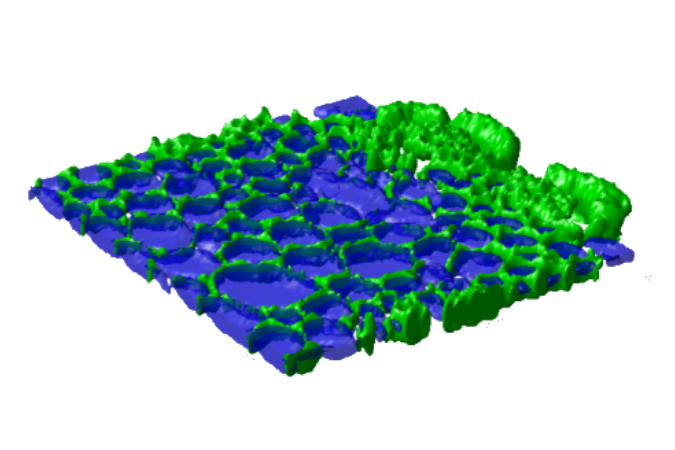
Nanoscale IR microscopy (s-SNOM)

Hyperspectral near-field imaging and spectroscopy of surfaces, 2D materials, phonon polaritons, and nanostructures. Tunable mid-IR across Reststrahlen bands without swapping crystals.

Typical experiment

Long s-SNOM or AFM-IR scans; mapping polariton dispersion; nanoscale chemical contrast with stable output power between wavelengths.

SI systems cited for this method

4 papers in this list

Coherent Raman microscopy (SRS / CARS)

Label-free chemical imaging of lipids, proteins, and metabolites. Rapid wavelength tuning for spectral focusing and multi-band experiments.

Typical experiment

SRS or CARS microscopes that need a low-RIN, tunable Stokes or pump beam with automated wavelength steps.

SI systems cited for this method

2 papers in this list

Photoacoustic & trace-gas IR

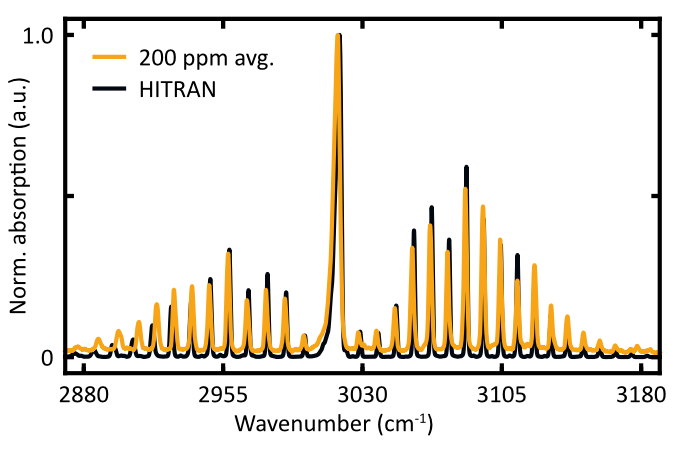
Molecular fingerprinting with narrow-linewidth MIR and photoacoustic detection (e.g. QEPAS). Papers in this list explicitly use widely tunable fiber-feedback OPOs.

Typical experiment

ppm-level gas detection, calibrated absorption, or rapid tuning across rotational–vibrational bands.

SI systems cited for this method

5 papers in this list

Biomedical & tissue imaging

Label-free contrast in tissue and cells via vibrational or near-field IR, including SRS-based OCT and IR photothermal approaches.

Typical experiment

Biomedical setups that combine mid-IR absorption with imaging modalities and need repeatable wavelength settings.

SI systems cited for this method

18 papers in this list

Tunable mid-IR spectroscopy & nanophotonics

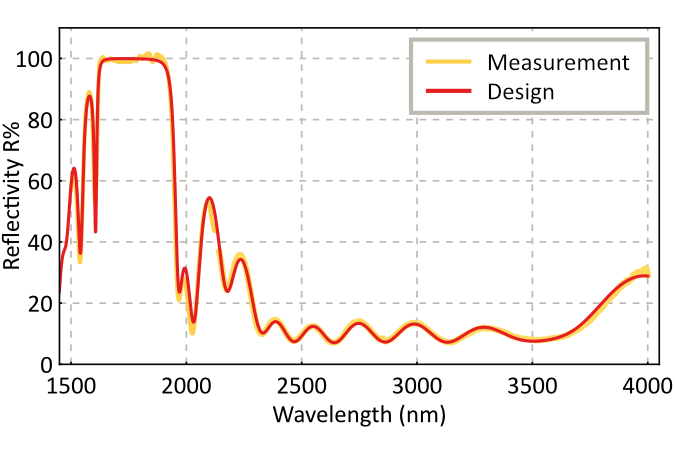
Broadband or step-tuned IR for FTIR-style mapping, ultrafast pump–probe, metasurfaces, plasmonics, and nonlinear nano-optics in the condensed-matter lab.

Typical experiment

You need wide spectral coverage (roughly 1–20 µm), fs–ps pulses, and a single automated source instead of multiple fixed OPO setups.

SI systems cited for this method

Further academic use cases

Lab and facility setups that match FF-OPO specs but may not yet appear in our reference list.

Not in bibliography

Hyperspectral MIR imaging

Wideband or step-scanned sources for focal-plane or point-scanning IR cameras beyond fixed-filter wheels.

Typical experiment

Automated wavelength sequences, stable radiance, and fs–ps pulses where time-resolved channels are needed.

SI systems cited for this method

Ultrafast materials & device testing

Pump–probe and nonlinear spectroscopy on thin films, heterostructures, and optoelectronic prototypes.

Typical experiment

Two synchronized tunable branches or a tunable probe with a fixed pump; multi-branch Alpha configurations.

SI systems cited for this method

Electrochemistry & energy materials (operando)

MIR probes of electrodes and electrolytes during cycling — often still developing methodologically.

Typical experiment

Tunable MIR for evolving species bands; stable power during long operando runs.

SI systems cited for this method

Beamlines & large-scale facilities

Replacement or supplement for fixed-line IR beamlines where a laboratory-scale tunable MIR source is required.

Typical experiment

High brilliance over a wide band, remote control, and reproducible settings for user experiments.

SI systems cited for this method

Multi-user & shared facility microscopes

University or institute instruments that need repeatable wavelength presets across many users and projects.

Typical experiment

Automation, replicator-style state recall, and stable day-to-day output without active cavity locking.

SI systems cited for this method

Industrial

Industrial & field deployment

Factories, analyser manufacturers, and applied sensing. Requirements focus on repeatability, automation, and long runtimes—not journal publications.

Typical industrial applications

Common deployment patterns for tunable or narrowband MIR in applied environments.

Not in bibliography

Emissions & process gas monitoring

Stack, flare, or duct measurements where species identification needs tunable MIR across fingerprint bands.

Typical experiment

Calibrated absorption or photoacoustic cells (QEPAS); multi-species duty cycles with automated wavelength tables.

SI systems cited for this method

Leak detection & fugitive emissions

Open-path or short-path sensing for hydrocarbons, refrigerants, and other IR-active molecules in facilities.

Typical experiment

Rapid stepping between lines, stable power for differential measurements, integration with commercial analyser platforms.

SI systems cited for this method

Chemical & pharmaceutical identification

Raw-material checks, solvent identification, and QC measurements that rely on narrowband MIR absorption.

Typical experiment

Repeatable wavelength accuracy, narrow linewidth, and scripted spectral scans for GMP or batch records.

SI systems cited for this method

Semiconductor & advanced materials QC

Metrology on wafers, thin films, and compound semiconductors using tunable MIR or near-field modules.

Typical experiment

Stable output for inline or sampling stations; pairing with commercial IR microscopes or custom beam delivery.

SI systems cited for this method

OEM & analyser integration

Built-in source for FTIR modules, photoacoustic sensors, hyperspectral engines, or custom microscopes.

Typical experiment

API/websocket control, compact footprint, long-term passive stability, and defined spectral repeatability for OEM qualification.

SI systems cited for this method

Standoff & security spectroscopy

Detection of hazardous or illicit substances via characteristic vibrational bands at standoff or portal setups.

Typical experiment

Collimated, tunable MIR output with narrow linewidth and fast band switching; often combined with external receivers.

SI systems cited for this method

Food, agriculture & polymers QC

Fat, protein, moisture, or additive contrast via absorption or photoacoustic sampling in bulk or at-line.

Typical experiment

Narrowband tuning for specific bands; integration with sampling optics and factory automation.

SI systems cited for this method

OEM coherent Raman & IR engines

Built-in tunable Stokes or pump modules for industrial or clinical analysers and microscopes.

Typical experiment

Low RIN, MHz rates, scripted wavelength programs; qualification for embedded deployment.

SI systems cited for this method

Match a system to your method

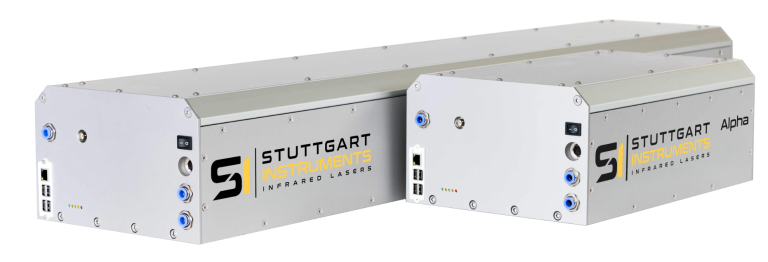
Send wavelength range, microscopy or spectroscopy modality, and pump laser—we will suggest Alpha, Piano, or Primus with specifications.

Contact us Compare products

Full bibliography

All references

Selected publications using widely tunable or narrow-linewidth sources (often fiber-feedback OPOs). Filter by method or search by title or author. Not an exhaustive database.

Bibliography is mainly academic literature; industrial projects are often unpublished.

  • Interfacial Strong Coupling and Negative Dispersion of Propagating Polaritons in Freestanding Oxide Membranes

    B. Lukaskawcez, S. Varshney, S. Choo, S. H. Park, D. Seo, L. Thompson, N. Hirshberg, M. Garber, D. Uram, H. Binger, S. J. Koester, S.-H. Oh, T. Low, B. Jalan and A. S. McLeod

    Adv. Optical Mat. 13, no. 29 (2025)

  • Machine-Learning-Enabled Discovery of Coexisting Phases through Nanospectroscopy of a Wide-Bandgap Semiconductor

    A. Bragg, F. Liu, Z. Yang, D. Kim, N. Hirshberg, M. Garber, B. Lukaskawcez, L. Thompson, S. MacDonald, H. Binger, D. Uram, A. Bucsek, B. Jalan and A. S. McLeod

    Nano Lett. 25, 17997-18005 (2025)

  • Efficient and tunable narrowband second-harmonic generation by a large-area etchless lithium niobate metasurface

    Y. Hou, Y. Luan, Y. Fan, A. Nardi, A. Zilli, B. Du, J. Shao, M. Finazzi, C. Wang, L. Zhang, M. Celebrano

    arXiv: 2602.00830 (2026)

  • Coherent control in quartz-enhanced photoacoustics: fingerprinting a trace gas at ppm-level within seconds

    S. Angstenberger, M. Floess, L. Schmid, P. Ruchka, T. Steinle and H. Giessen

    Optica 12, 1-4 (2025)

  • Photoacoustic spectroscopy with a widely tunable narrowband fiber-feedback optical parametric oscillator

    L. Schmid, F. Kadriu, S. Kuppel, M. Floess, T. Steinle and H. Giessen

    AIP Advances 14, 105328 (2024)

  • Angular dispersion suppression in deeply subwavelength phonon polariton bound states in the continuum metasurfaces

    L. Nan, A. Mancini, T. Weber, G. L. Seah, E. Cortes, A. Tittl and S. A. Maier

    Nat. Photonics 19, 615–623 (2025)

  • Multiferroicity in plastically deformed SrTiO3

    X. Wang, A. Kundu, B. Xu, S. Hameed, N. Rothem, S. Rabkin, L. Rogić, L. Thompson, A. McLeod, M. Greven, D. Pelc, I. Sochnikov, B. Kalisky and A. Klein

    Nat. Commun. 15, 7442 (2024)

  • Revealing Mode Formation in Quasi-Bound States in Continuum Metasurfaces via Near-Field Optical Microscopy

    T. Gölz, E. Baü, A. Aigner, A. Mancini, M. Barkey, F. Keilmann, S. A. Maier and A. Tittl

    Adv. Mater. 36, 2405978 (2024)

  • Hybrid Molecular Beam Epitaxy for Single-Crystalline Oxide Membranes with Binary Oxide Sacrificial Layers

    S. Varshney, S. Choo, L. Thompson, Z. Yang, J. Shah, J. Wen, S. J. Koester, K. A. Mkhoyan, A. S. McLeod and B. Jalan

    ACS Nano 18, 6348 (2024)

  • Probing the micro- and nanoscopic properties of dental materials using infrared spectroscopy: A proof-of-principle study

    M. Beddoe, T. Gölz, M. Barkey, E. Bau, M. Godejohann, S. A. Maier, F. Keilmann, M. Moldovan, D. Prodan, N. Ilie and A. Tittl

    Acta Biomat. 168, 309 (2023)

  • Compensating losses in polariton propagation with synthesized complex frequency excitation

    F. Guan, X. Guo, S. Zhang, K. Zeng, Y. Hu, C. Wu, S. Zhou, Y. Xiang, X. Yang, Q. Dai and S. Zhang

    Nat. Mater. 23, 506–511 (2024)

  • Multiplication of the orbital angular momentum of phonon polaritons via sublinear dispersion

    A. Mancini, L. Nan, R. Berté, E. Cortés, H. Ren, S. A. Maier

    Nat. Photonics 18, 677 (2024)

  • Electrically switchable metallic polymer metasurface device with gel polymer electrolyte

    D. de Jong, J. Karst, D. Ludescher, M. Floess, S. Moell, K. Dirnberger, M. Hentschel, S. Ludwigs, P. V. Braun and H. Giessen

    Nanophotonics 12, 1397 (2023)

  • Near-Field Retrieval of the Surface Phonon Polariton Dispersion in Free-Standing Silicon Carbide Thin Films

    A. Mancini, L. Nan, F. J. Wendisch, R. Berté, H. Ren, E. Cortés, S. A. Maier

    ACS Photonics 9, 3696 (2022)

  • Controlling the propagation asymmetry of hyperbolic shear polaritons in beta-gallium oxide

    J. Matson, S. Wasserroth, X. Ni, M. Obst, K. Diaz-Granados, G. Carini, E. M. Renzi, E. Galiffi, T. G. Folland, L. M. Eng, J. M. Klopf, S. Mastel, S. Armster, V. Gambin, M. Wolf, S. C. Kehr, A. Alù, A. Paarmann and J. D. Caldwell

    Nat. Commun. 14, 5240 (2023)

  • Experimental Observation of ABCB Stacked Tetralayer Graphene

    K. G. Wirth, J. B. Hauck, A. Rothstein, H. Kyoseva, D. Siebenkotten, L. Conrads, L. Klebl, A. Fischer, B. Beschoten, C. Stampfer, D. M. Kennes, L. Waldecker, T. Taubner

    ACS Nano 16, 16617 (2022)

  • Electro-active metaobjective from metalenses-on-demand

    J. Karst, Y. Lee, M. Floess, M. Ubl, S. Ludwigs, M. Hentschel and H. Giessen

    Nat. Commun. 13, 7183 (2022)

  • Observing 0D subwavelength-localized modes at ~100 THz protected by weak topology

    J. Lu, K. G. Wirth, W. Gao, A. Hessle, B. Sain, T. Taubner, T. Zentgraf

    Science Advances 7, 49 (2021)

  • Electrically switchable metallic polymer nanoantennas

    J. Karst, M. Floess, M. Ubl, C. D., C. Malacrida, T. Steinle, S. Ludwigs, M. Hentschel, H. Giessen

    Science 374, 612 (2021)

  • Label-free detection of brain tumors in a 9L gliosarcoma rat model using stimulated Raman scattering-spectroscopy optical coherence tomography

    S. Soltani, Z. Guang, Z. Zhang, J. J. Olson, and F. E. Robles

    J. Biomed. Opt. 26, 076004 (2021)

  • Tunable s-SNOM for Nanoscale Infrared Optical Measurement of Electronic Properties of Bilayer Graphene

    K. G. Wirth, H. Linnenbank, T. Steinle, L. Banszerus, E. Icking, C. Stampfer, H. Giessen, T. Taubner

    ACS Photonics 8, 418 (2021)

  • Interferometric near-field characterization of plasmonic slot waveguides in single- and poly-crystalline gold films

    M. Prämassing, M. Liebtrau, H. J. Schill, S. Irsen, and S. Linden

    Opt. Exp. 28, 12998 (2020)

  • Watching in situ the hydrogen diffusion dynamics in magnesium on the nanoscale

    J. Karst, F. Sterl, H. Linnenbank, T. Weiss, M. Hentschel and H. Giessen

    Sci. Adv. 6, eaaz0566 (2020)

  • Pushing Down the Limit: In Vitro Detection of a Polypeptide Monolayer on a Single Infrared Resonant Nanoantenna

    R. Semenyshyn, F. Mörz, T. Steinle, M. Ubl, M. Hentschel, F. Neubrech, and H. Giessen

    ACS Photonics 6, 2636 (2019)

  • Robust and rapidly tunable light source for SRS/CARS microscopy with low-intensity noise

    H. Linnenbank, T. Steinle, F. Mörz, M. Flöss, H. Cui, A. Glidle, and H. Giessen

    Adv. Photonics 1, 055001 (2019)

  • Coherently broadened, high-repetition-rate laser for stimulated Raman scattering–spectroscopic optical coherence tomography

    F. E. Robles, H. Linnenbank, F. Mörz, P. Ledwig, T. Steinle, and H. Giessen

    Opt. Lett. 44, 291 (2019)

  • Nanoscale Hydrogenography on Single Magnesium Nanoparticles

    F. Sterl, H. Linnenbank, T. Steinle, F. Mörz, N. Strohfeldt, and H. Giessen

    Nano Lett. 18, 4293 (2018)

  • Nonlinear Spectroscopy on the Plasmonic Analog of Electromagnetically Induced Absorption

    J. Krauth, T. Schumacher, J. Defrance, B. Metzger, M. Lippitz, T. Weiss, H. Giessen, M. Hentschel

    ACS Photonics 6, 2850 (2019)

  • Wavelength-Dependent Third-Harmonic Generation in Plasmonic Gold Nanoantennas

    J. Krauth, H. Giessen, and M. Hentschel

    ACS Photonics 5, 1863 (2018)

  • Unbiased All-Optical Random-Number Generator

    T. Steinle, J. N. Greiner, J. Wrachtrup, H. Giessen, and I. Gerhardt

    Phys. Rev. X 7, 041050 (2017)

  • High repetition rate mid-infrared supercontinuum generation from 1.3 to 5.3 µm in robust step-index tellurite fibers

    S. Kedenburg, C. Strutynski, B. Kibler, P. Froidevaux, F. Désévédavy, G. Gadret, J.-C. Jules, T. Steinle, F. Mörz, A. Steinmann, H. Giessen, and F. Smektala

    J. Opt. Soc. Am. B 34, 601 (2017)

  • Nearly diffraction limited FTIR mapping using an ultrastable broadband femtosecond laser tunable from 1.33 to 8 µm

    F. Mörz, R. Semenyshyn, T. Steinle, F. Neubrech, U. Zschieschang, H. Klauk, A. Steinmann, and H. Giessen

    Opt. Exp. 25, 32355 (2017)

  • Beam switching and bifocal lensing using active plasmonic metasurfaces

    X. Yin, T. Steinle, L. Huang, T. Taubner, M. Wuttig, T. Zentgraf, and H. Giessen

    Light Sci. Appl. 6, e17016 (2017)

  • Synchronization-free all-solid-state laser system for stimulated Raman scattering microscopy

    T. Steinle, V. Kumar, M. Floess, A. Steinmann, M. Marangoni, C. Koch, C. Wege, G. Cerullo, and H. Giessen

    Light Sci. Appl. 5, e16149 (2016)

  • Second harmonic generation spectroscopy on hybrid plasmonic/dielectric nanoantennas

    H. Linnenbank, Y. Grynko, J. Förstner, and S. Linden

    Light Sci. Appl. 5, e16013 (2016)

  • Second harmonic generation spectroscopy on second harmonic resonant plasmonic metamaterials

    H. Linnenbank and S. Linden

    Optica 2, 698 (2015)

Missing your paper? Let us know.